

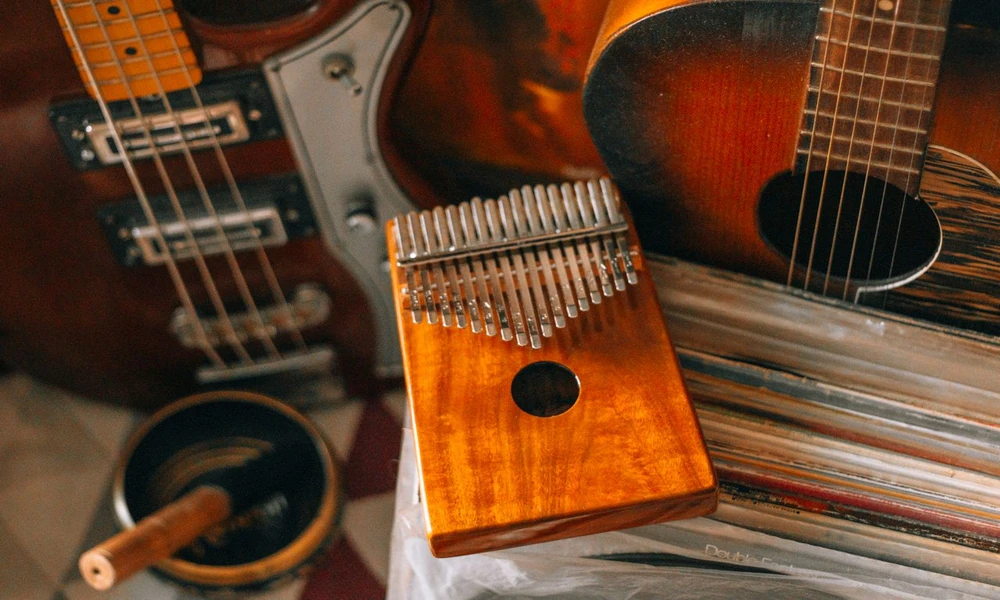
The kalimba, a captivating musical instrument, boasts deep roots in Africa. Its rich history spans thousands of years, intriguing musicians and music lovers worldwide today. This inquiry into the kalimba opens a door to a remarkable past that showcases the instrument’s evolution.
Belonging to a family of over 100 traditional African thumb pianos, each variant carries unique names, designs, and cultural significance. The gentle, chimelike sound produced by this instrument has enchanted listeners, from African kings’ palaces to modern concert stages.
While the metal-tined kalimba emerged around 1300 years ago, earlier prototypes date back approximately 3000 years. Ethnomusicologist Hugh Tracey popularized the name “kalimba” in the mid-20th century, although “mbira” remains the widely recognized term in Africa.
In 1586, Father Dos Santos documented the first European encounter with this enchanting instrument, calling it “ambira.” His description highlighted its sweet and gentle harmony. The art of crafting and playing the mbira/sansi was recognized by UNESCO as an Intangible Cultural Heritage of Humanity in 2020, solidifying its global significance.
Join us on a journey to discover how this sacred African instrument transformed into a beloved global musical companion.
The Ancient Origins of the Kalimba
The ancient past of the kalimba unveils a rich tapestry of musical innovation. Ethnomusicologist Gerhard Kubik suggests that this instrument was invented twice in Africa, marking two significant technological advancements.
Early Plant-based Instruments in West Africa
Approximately 3000 years ago, the first thumb piano instruments emerged in West Africa, particularly around present-day Cameroon. These early kalimbas were crafted entirely from plant materials, such as bamboo and wood.
Though these instruments laid the groundwork for what would become the kalimba, their sound was softer. The notes produced did not sustain for long, making them quite different from their later metal counterparts.
Transition to Metal Tines in Southeastern Africa
A pivotal change occurred around 1300 years ago when the Iron Age reached the Zambezi Valley in southeastern Africa. This period brought advanced metalworking skills to the region, allowing African craftspeople to innovate.
They replaced the plant tines with metal, creating a louder and brighter instrument. This transition not only enhanced the sound but also allowed for longer sustain, leading to a richer musical experience.
Historical European Documentation and Early Records
The first European to document this instrument was Father Dos Santos in 1586, while in present-day Mozambique. He described a 9-note iron-tined instrument called “ambira,” which was played with long thumb nails in the king’s palace.
By the time Europeans recorded the kalimba, it was already a respected musical tradition. Dos Santos noted its “sweet and gentle harmony of accordant sounds,” showcasing its cultural significance.
Today, traditional kalimbas with plant tines are still crafted by artisans in Africa, though they are less common than the metal-tined versions.
Variations and Cultural Significance of the Kalimba and Mbira
Across Africa, the kalimba and mbira embody a remarkable diversity, reflecting the rich cultural heritage of various communities. These thumb pianos come in over 100 distinct types, each varying in size, number of tines, tuning, and cultural purpose. From simple 6-tine instruments to complex 32-key designs, the variations are fascinating.
Diversity of Thumb Piano Types Across Africa
The incredible diversity of thumb pianos across Africa showcases the creativity of different cultures. Each region has its own unique designs and traditions surrounding these instruments. Here are some notable variations:
- Simple instruments with 6-10 tines found widely in sub-Saharan Africa.
- The mbira dzavadzimu, created by the Shona people, features 21-25 tines and holds significant spiritual importance.
- Mbira nyunga nyunga, originating from Manicaland, typically has 15 keys.
- Njari mbira with 30-32 keys, rooted in Zimbabwe, particularly Masvingo and Makonde.
- Nhare mbira, with 23-24 keys, also from Zimbabwe.
- Mbira matepe, featuring 26 keys, found along the borders of Zimbabwe and Mozambique.
The Shona People’s Mbira Dzavadzimu and Its Spiritual Role
The Shona people of Zimbabwe are known for their creation of the mbira dzavadzimu, or “the big mbira of the ancestral spirits.” This sacred instrument typically has between 22 and 28 metal keys arranged on a hardwood soundboard called a gwariva. Often, it is adorned with bottle caps or shells, known as machachara, which produce a buzzing sound believed to attract ancestral spirits.
In Shona culture, the mbira dzavadzimu plays a central role in religious ceremonies. It is used during all-night Bira ceremonies to communicate with ancestors, helping participants enter trance states. The paired performance style, featuring the kushaura (caller) and kutsinhira (responder), creates intricate polyrhythms that are characteristic of Shona music.
Traditional and Social Contexts of Playing the Kalimba
The kalimba is more than just a musical instrument; it is woven into the fabric of social life. It serves various purposes, from personal companionship while tending cattle to celebratory roles at weddings and royal courts. In many cultures, the kalimba accompanies singing, embodying the saying,
“Kalimba without singing is like rice without beans.”
As the kalimba spread across Africa, each clan or tribe adapted it to their unique traditions. This adaptability has allowed the instrument to flourish, maintaining its relevance in contemporary society.
Hugh Tracey and the Global Popularization of the Kalimba
Hugh Tracey played a pivotal role in bringing the kalimba to a global audience. Born in 1903, he found himself working on a tobacco farm in Rhodesia (now Zimbabwe) during the 1920s. This experience introduced him to the mesmerizing music of African workers and their mbira instruments.
Tracey’s passion for African music grew, leading him to correspond with renowned composers like Gustav Holst. Holst encouraged him to pursue serious research at a time when many Europeans dismissed African musical traditions. This encouragement set Tracey on a lifelong mission to record and preserve the diverse musical cultures of Africa.
Throughout the 1920s and 1930s, Tracey embarked on numerous expeditions, documenting the rich tapestry of African music. In 1954, he founded the International Library of African Music (ILAM), which has become one of the world’s largest repositories of African musical history.
To fund further research expeditions, Tracey established African Musical Instruments (AMI) in 1954. This initiative led to the creation of the Hugh Tracey Kalimba, a westernized version designed for global audiences. This kalimba utilized the standard Western do-re-mi scale, tuned diatonically in the key of G.
The innovative design featured notes arranged in an alternating right-left pattern, radiating outward from the center. This layout made it intuitive for players to create chords and melodies. Tracey’s choice of a Western tuning was practical, maximizing the instrument’s accessibility worldwide while using local kiaat wood to maintain its African roots.
The kalimba made its breakthrough into Western popular culture when Maurice White of Earth, Wind and Fire featured the Treble Kalimba in hit songs like “Evil” (1973) and “Kalimba Story” (1974). These songs introduced millions to the enchanting sound of the kalimba.
Additionally, the kalimba’s unique sound graced iconic film soundtracks, including Alien and Edward Scissorhands, further cementing its place in global popular culture. Other influential figures, such as Dumisani Maraire and Ephat Mujuru, also played vital roles in bringing mbira music to international audiences.
Tracey’s efforts, along with the writings and recordings of Zimbabwean musicians by Paul Berliner, have been crucial in documenting and sharing traditional mbira repertoire with the world.
The Musical Design and Evolution of the Kalimba
The kalimba’s design has evolved significantly, showcasing a blend of traditional craftsmanship and modern innovation. As a member of the lamellaphone family, this musical instrument consists of a wooden board fitted with staggered metal tines. Players produce sound by plucking these tines with their thumbs or fingers.
Physical Characteristics and Materials Used
The kalimba’s unique acoustic properties stem from its inharmonic overtones. When a tine is plucked, it creates a characteristic chimelike sound. This sound is further enriched by secondary vibrations from adjacent tines, adding harmonic complexity to each note.
Traditionally, kalimbas featured wood soundboards and sometimes gourd resonators. However, modern versions often use plated spring steel for the tines. Historical restrictions during colonial times forced African craftspeople to innovate, leading them to repurpose nails and bicycle spokes for creating tines.
Tuning Systems and Musical Scale Adaptations
Kalimbas exhibit a rich variety of traditional African tuning systems. Historical tunings do not align perfectly with Western scales. They often feature “stretched” octaves and unique interval relationships that vary by instrument and player.
Among Shona mbira players, the Nyamaropa tuning is the most common, resembling the Western Mixolydian mode. Other traditional tunings include Dambatsoko, Katsanzaira, and Mavembe, each contributing distinct musical characters to the performance.
The Hugh Tracey kalimba popularized diatonic tuning in G major for a global audience. This flexibility allows players to easily adjust individual tines, enabling them to create any Western or non-Western scale.
Modern Innovations and Variation in Kalimba Types
Modern innovations have expanded the kalimba family significantly. Instruments like the Array mbira feature up to 150 tines arranged in the circle of fifths. Additionally, the electrified Gravikord hybrid and the Hohner Guitaret electric lamellophone have emerged, showcasing the versatility of this musical instrument.
Experimental tunings, such as Georg Hajdu’s adaptation of the Hugh Tracey alto kalimba to the Bohlen-Pierce scale, highlight the instrument’s capacity for avant-garde musical exploration. The kalimba continues to evolve, blending tradition with modernity, making it a beloved musical tool worldwide.
Conclusion
The kalimba’s evolution reflects a blend of tradition and innovation, captivating many. From its ancient roots in West Africa to its current status as a cherished global instrument, this thumb piano tells a rich story. Each generation has adapted and embraced its sound, ensuring its relevance today.
The legacy of the Shona people’s mbira dzavadzimu continues to inspire musicians, while Hugh Tracey’s efforts helped introduce this instrument to international audiences. With its portability and ease of use, the kalimba appeals to players of all ages.
As we explore the music it creates, we honor the past while embracing new possibilities. Whether for personal reflection or cultural connection, the kalimba offers a unique experience that bridges history and modern expression. Discover the joy of playing this remarkable instrument and become part of its ongoing story.